


Technical Characteristics and Application Analysis of Closed Hydraulic Systems
A closed hydraulic system is a hydraulic transmission technology featured with enclosed oil circuits. Its core feature is that hydraulic fluid circulates internally without direct connection to an ext...

Technical Characteristics and Application Analysis of Closed Hydraulic Systems
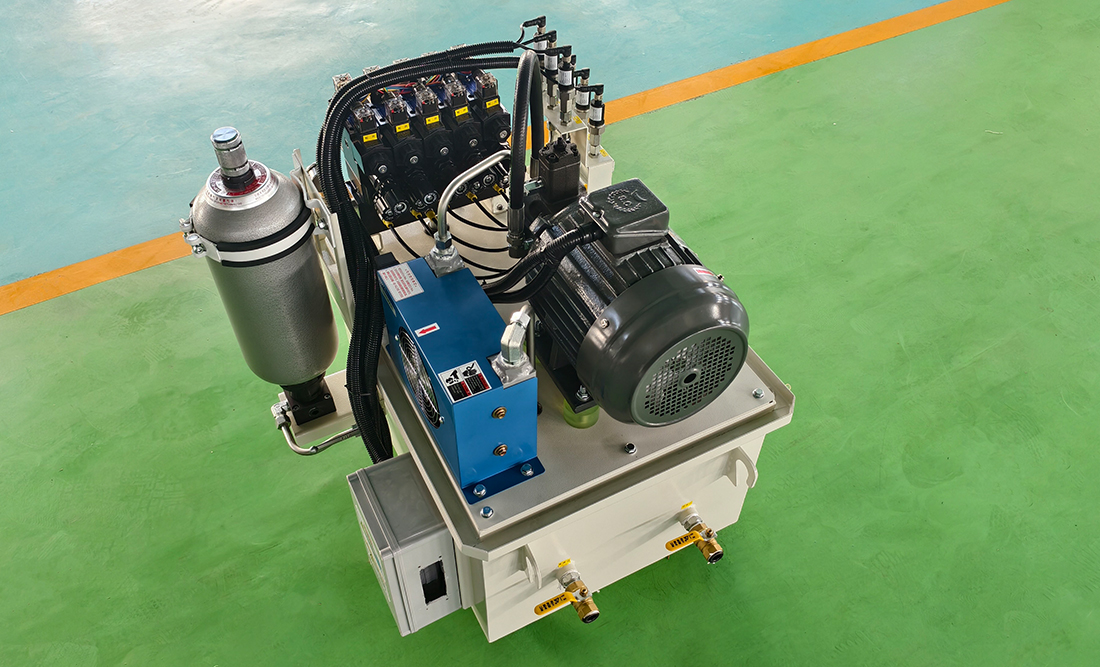
A closed hydraulic system is a hydraulic transmission technology featured with enclosed oil circuits. Its core feature is that hydraulic fluid circulates internally without direct connection to an external oil tank. Compared with open hydraulic systems, closed systems possess distinctive design concepts and superior performance, and are widely applied in construction machinery, metallurgical equipment, aerospace and other fields. This paper analyzes the system from the perspectives of working principle, core advantages, application scenarios and existing challenges.
1. System Principle and Structural Characteristics
In addition, the dual safety valve design copes with dynamic switching between high-pressure and low-pressure oil lines to guarantee system pressure safety.
2. Core Performance Advantages
High Efficiency and Fast Dynamic Response
The variable displacement pump directly regulates flow rate and direction, eliminating throttling loss caused by directional valves. Its transmission efficiency is 15% to 30% higher than that of open systems. Meanwhile, the symmetrical circuit enables rapid direction switching of actuators and delivers quicker response, which is ideal for working conditions with frequent start and stop, such as travel drives of construction machinery.
Precise Control and High Stability
Hydraulic valves accurately control fluid direction and pressure. Combined with closed-loop control strategy, the system achieves high-precision control of displacement, velocity and force with a control error no more than 0.5%, satisfying the requirements of high-precision equipment such as aircraft hydraulic actuators. The enclosed circuit also reduces risks of external contamination and fluid oxidation, extending the service life of hydraulic fluid by over 30%.
Compact Structure and Energy Saving
Moreover, the hydrostatic braking function recovers braking energy and reduces energy consumption.
3. Typical Application Scenarios
Construction Machinery: The travel drive systems of pavers and fully hydraulic road rollers adopt closed circuits, which adapt to load changes on complex road surfaces and improve traction and maneuverability.
Special Vehicles: Aircraft tractors and rail grinding vehicles apply closed systems to realize high-precision travel control and avoid wear of mechanical transmission chains.
Industrial Equipment: Metallurgical rolling mills and plate bending machines rely on the system’s high pressure (up to 700 bar) and stable flow to ensure the forming precision of materials.
Aerospace: Closed hydraulic circuits are used for aircraft hydraulic actuators. They feature light weight and strong pollution resistance to ensure operational reliability in extreme environments.
4. Technical Challenges and Maintenance Guidelines
Heat dissipation can be improved by installing additional flushing valves or external cooling devices. For daily maintenance, regularly monitor the contamination level of hydraulic fluid (below NAS Class 8), water content (≤ 0.05%) and the condition of sealing parts, so as to prevent efficiency decline caused by internal leakage.
5. Future Development Trends
With the integration of electro-hydraulic proportional technology, intelligent sensing and digital twin technology, closed hydraulic systems are evolving towards intelligent functions such as adaptive control and fault prediction. For instance, real-time monitoring of charge pressure and swash plate angle enables dynamic optimization of system efficiency. Furthermore, the popularization of environmentally friendly bio-based hydraulic fluid will further enhance the sustainability of closed hydraulic systems.
Conclusion
Need a customized digital strategy?
Speak with our system architects about integrating Industry 4.0 into your existing infrastructure.


